3D VISUALISATION · 7 MIN
How to sell apartments in a tenement before the renovation ends
Buyers see scaffolding, yet they are asked to buy an apartment that will be ready in a year or two. How to show a tenement after renovation and as it is today, so the offer earns trust without misleading anyone.
Skyverse
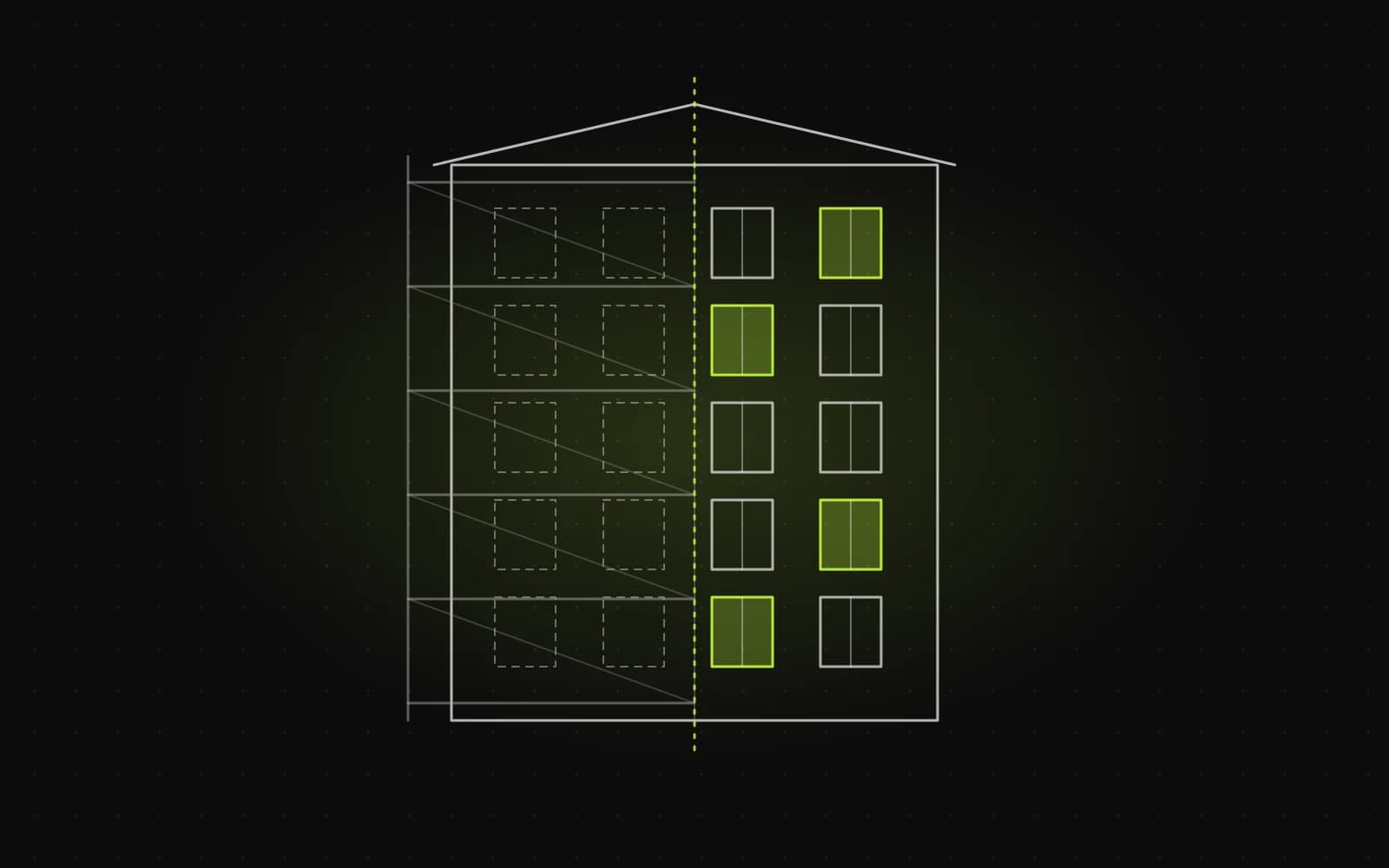
Selling apartments in a tenement house that is still being renovated is a different job from selling in a new building. The buyer sees scaffolding, stripped plaster and empty window openings, and is asked to commit to a unit that will be ready in a year or two. On the other hand, a historic building has what a new one doesn't: a history, an address and character. This article covers how to show both honestly, so buyers believe the offer and don't feel misled at handover.
What buyers need to see before they trust the offer
With a building under renovation, buyers ask three questions:
- What will it look like when the work is done?
- What is there today, and is the work really progressing?
- Who is behind it, and will they finish on time?
A good offer answers all three. Visualisations alone answer only the first, and construction photos only the second. Together with a schedule, concrete numbers and easy contact with a sales adviser, they add up to a picture buyers can trust.
Visualising the facade and interiors after renovation
A visualisation is the only way for a buyer to see the finished apartment before the work ends. For a tenement house it is worth preparing three kinds of images:
- the restored facade, ideally in the context of the street, because in a historic building the address and surroundings are part of the offer,
- the interiors of signature units: those with high ceilings, windows onto a landmark view, an attic or preserved details,
- the common areas, such as the staircase, courtyard or entrance, because in a tenement these change the most after renovation.
Historic buildings bring one more challenge: units are rarely repeated. Each floor has a different ceiling height, attic apartments have sloping ceilings, and some units haven't even been partitioned yet. So interior visualisations are best built directly from each unit's floor plan, not from one "typical apartment". Interactive 3D made from a floor plan can show even an apartment that today is an empty space behind a partition wall.
Show the real state, not only the end result
It is tempting to show nothing but visualisations on the website. That's a mistake. Buyers will walk past the building or find it on Google Street View anyway, and they will spot the gap between the website and reality straight away.
It is better to show the construction openly and turn it into an argument:
- photos from each stage of the work, with the date they were taken,
- a short description of what has been done and what comes next,
- a schedule with stages (e.g. roof, services, facade, finishing the common areas) and the planned completion date,
- a caption on every visualisation saying it shows the building after renovation.
Regular updates, even short ones, show that the work is moving and that the developer has nothing to hide. A buyer who visits the site for the third time should find something new.
Floor plans and numbers in one place
In a tenement house the floor plan matters even more than in a new building, because the layouts are unusual. Every unit needs its own plan with room areas, the floor and which way the windows face. Add a unit list with filters, statuses (available, reserved, sold) and prices. A buyer who has to phone to find out whether a unit is still available often won't.
The website should also bring together the key numbers of the development: the number of apartments and retail units, floor areas, storeys and the construction schedule. It's simple, and it saves the sales advisers a lot of repetitive questions.
Virtual staging in a historic building
Large apartments in tenement houses have high ceilings, unusual proportions and sometimes walk-through rooms. They are hard to picture from an empty plan, and virtual staging shows how such an interior can be furnished: where the table goes, how to use an alcove, what to do with a walk-through room.
Staging follows the same rule as any other visualisation: you may show a sample arrangement, but you may not change the geometry. Dimensions, windows, ceiling height and the position of load-bearing walls must match the design. If an image is made with AI tools, check that they haven't "improved" the room's proportions, and caption it clearly as a visualisation.
Visualisations and consumer law
A visualisation is part of the advertising, so the same rules apply to it as to the whole offer. Poland's Act on Counteracting Unfair Market Practices prohibits practices that mislead the average consumer, including about the characteristics of a product. UOKiK, the Polish competition and consumer protection authority, has already acted against developers' practices, including advertising prices that weren't actually on offer and the way unit floor areas were stated.
What to avoid in visualisations of a building under renovation:
- a view that the window in question won't have,
- greenery or a courtyard that isn't part of the development,
- a finish specification better than the one in the contract,
- walls and windows moved, or rooms with larger proportions.
It is also worth knowing that the definition of a development project in Poland's Developer Act (the 2021 act protecting buyers of apartments and houses) covers not only construction but also reconstruction. If the sale of units in a tenement falls under that act, the developer must, among other things, deliver an information prospectus before a reservation or development agreement is signed, and give the address of the web page with unit prices in its adverts and listings. Whether and how these rules apply to a particular development depends on the kind of contracts signed with buyers, so it pays to review the sales materials with a lawyer before sales start.
An example: Agnieszki 9 in Stradom
Agnieszki 9 is a 19th-century tenement house in Kraków's Stradom district with a view of Wawel Castle: 34 apartments and 2 retail units. Construction runs until the end of 2027, so the website we designed and built for Koneser Group sells the apartments before the building is finished.
What's on it:
- a visual identity for the development, distinct from Koneser Group's other tenement houses,
- the location, shown with photos and a short description of Stradom,
- the development in numbers: the number of units, floor area, storeys and the construction schedule in one place,
- a unit list with availability and floor filters, the price per square metre and the status of every unit,
- an "Ask for details" button next to every unit and direct contact with the sales advisers.
Since launch we have been updating the content and the offer as sales progress, because a website for a building under renovation is never a one-off project.
A checklist for the start of sales
- Visualisations of the facade, interiors and common areas, each captioned as a visualisation
- A floor plan for every unit with room areas, not one “typical” layout
- Current construction photos with dates, and a schedule with stages
- A unit list with statuses and prices, kept up to date
- Virtual staging for units with unusual layouts, without changing the geometry
- Sales materials reviewed by a lawyer before launch
If you are selling units in a tenement under renovation, see how we make 3D visualisations from floor plans, including for apartments that are yet to be partitioned, and development websites. Or write to us and tell us about your building.